
Анализът на потребностите на CoViS изследва преживяванията на спортистите и
възгледите на спортните специалисти относно сексуалния тормоз, професионалните
граници, подаването на сигнали и защитата в спорта. Резултатите осигуряват
доказателствената основа за образователните ресурси, разработвани по проекта CoViS.
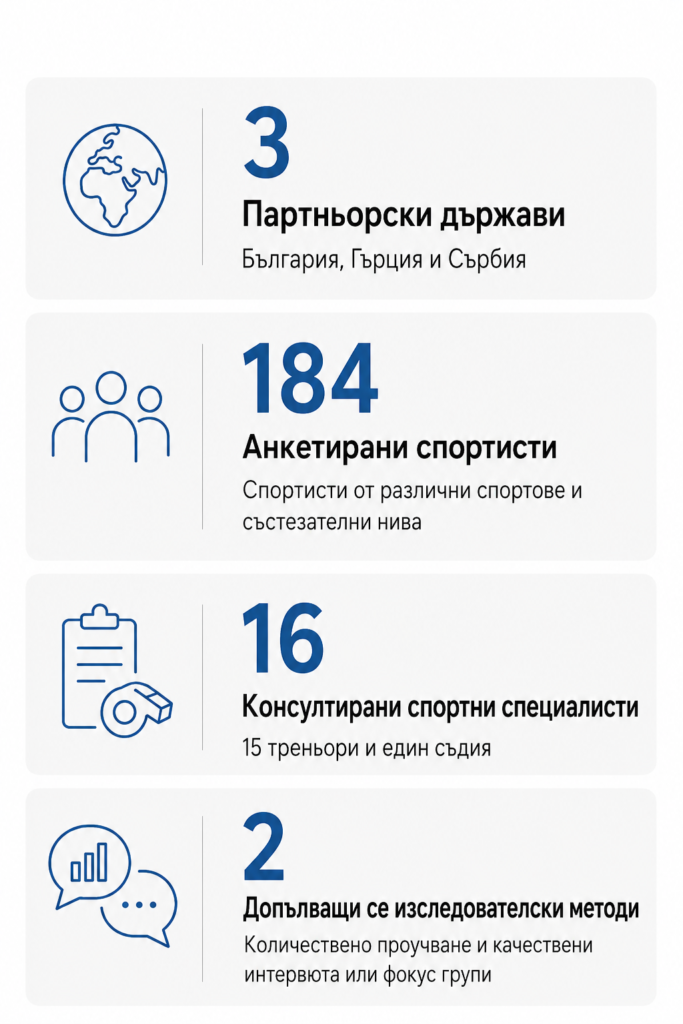
Изследването накратко
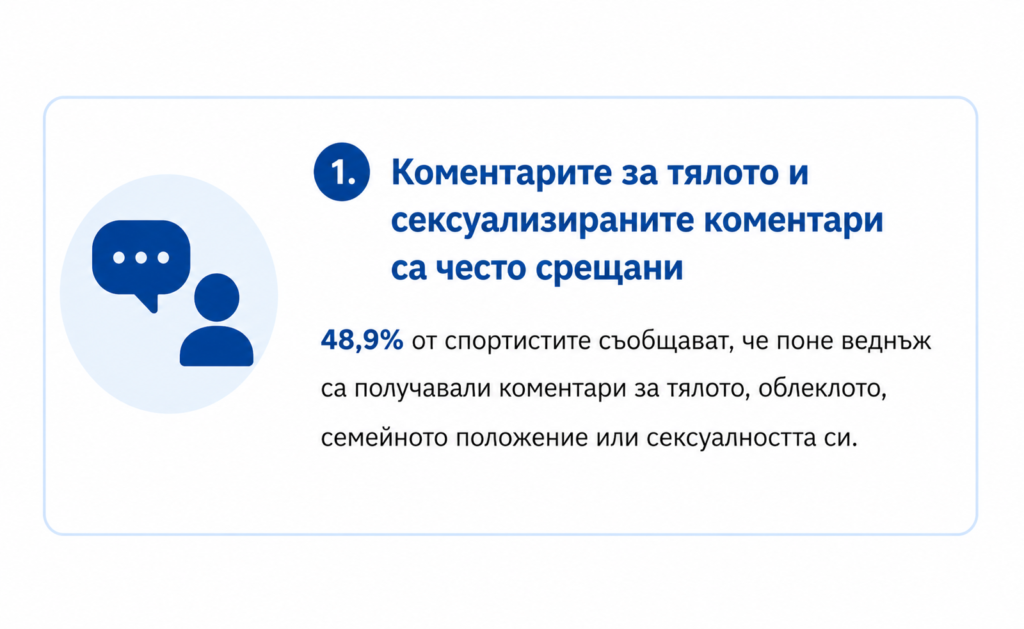
Шест основни констатации
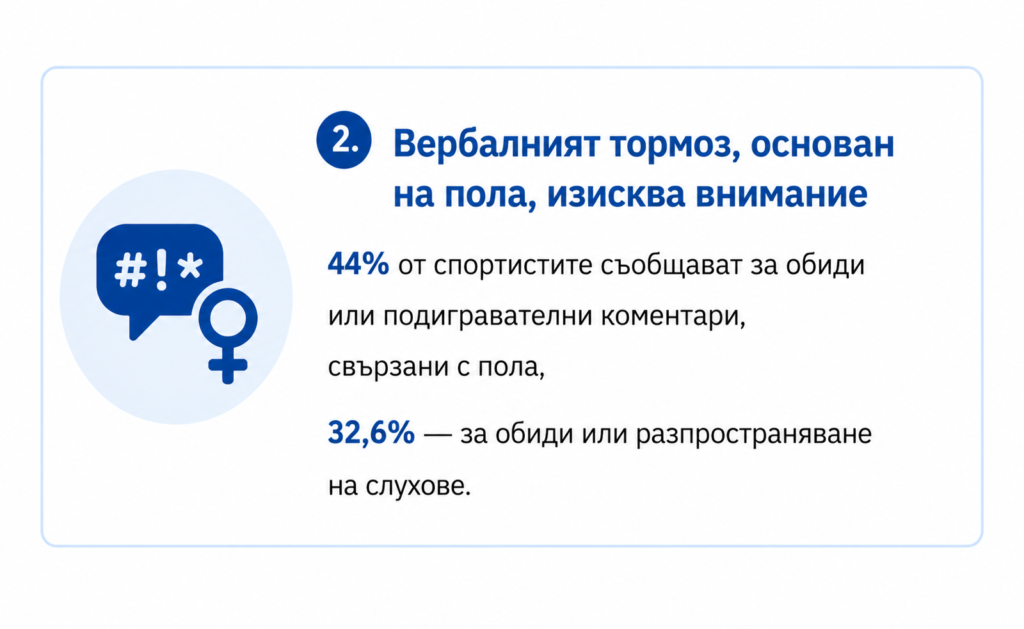
Това поведение не трябва да се отхвърля като безобидна шега. То може да допринесе
за дискомфорт, унижение и нормализиране на неподходящо поведение в спорта.
Повтарящият се вербален тормоз може да засегне психологическата сигурност и да
намали готовността на спортистите да говорят или да подават сигнали.
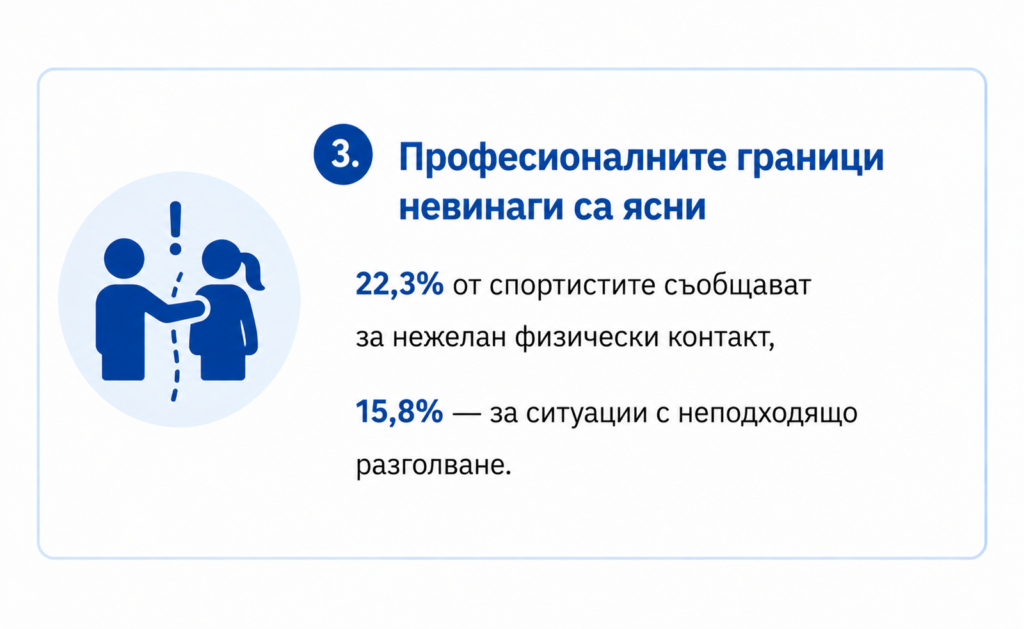
Спортните специалисти подчертават, че някои прояви, приемани преди като нормален
израз на близост, всъщност могат да представляват нарушение на професионалните
граници.
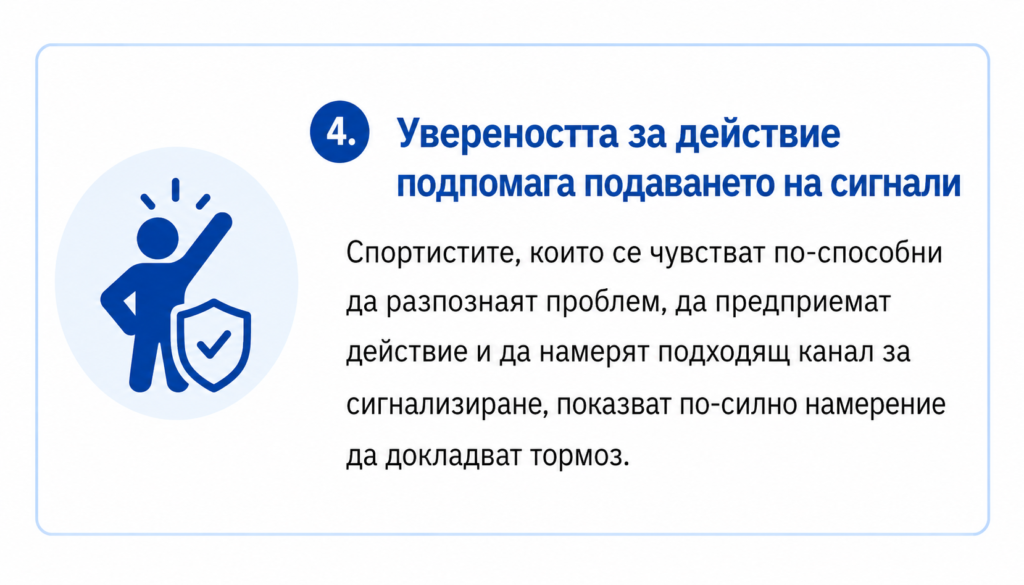
Затова обучението трябва да предоставя практически знания: какво да се направи, с
кого да се осъществи контакт, как да се документира притеснението и каква подкрепа
трябва да последва.
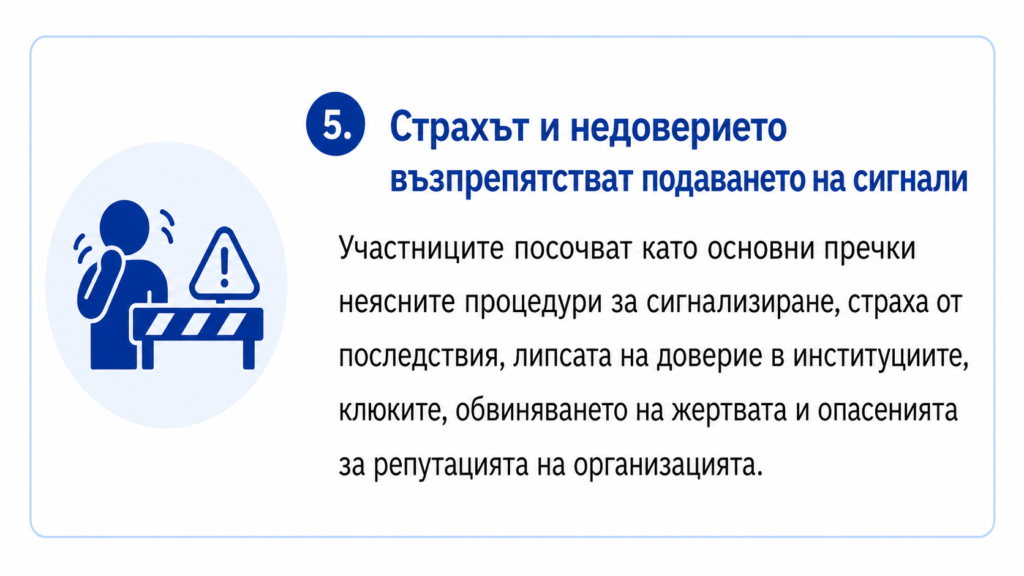
Системата за подаване на сигнали е ефективна само когато е достъпна, поверителна и
независима и е последвана от надеждна организационна реакция.
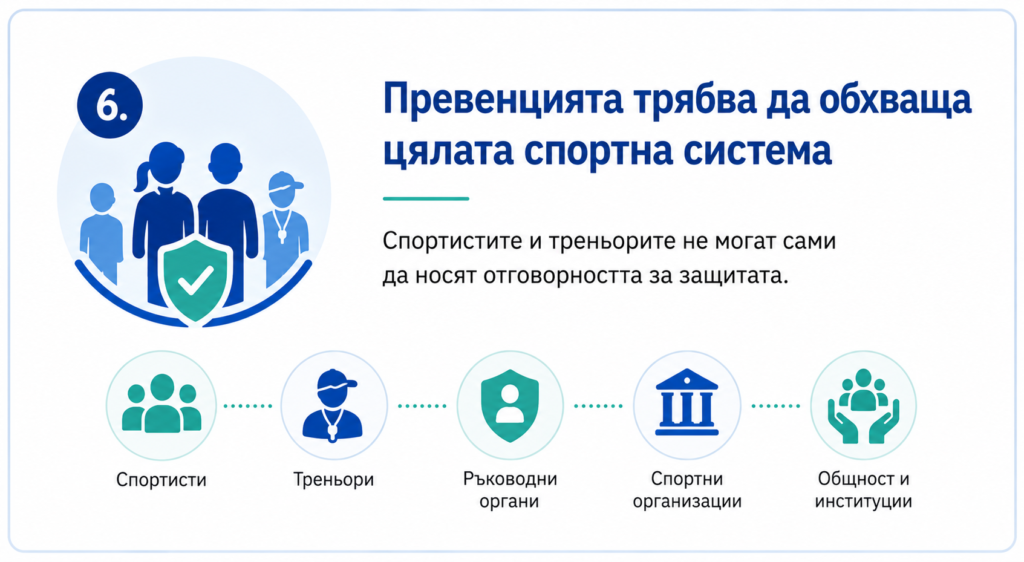
Клубовете и федерациите се нуждаят от ясни кодекси за поведение, обучен персонал
по защита, надеждни канали за сигнализиране, последователни процедури, подходящи
последващи действия и организационна отговорност.
Какво означава това за обучението по CoViS
Анализът на потребностите показва, че ефективното обучение за защита трябва да
надхвърля определенията. Образователните ресурси на CoViS ще помогнат на
спортистите и спортните специалисти да:
- разпознават различни форми на неподходящо поведение;
- разбират професионалните граници и дисбаланса на власт;
- разпознават ранните предупредителни признаци и рисковите ситуации;
- оспорват обвиняването на жертвата и омаловажаването на вредното поведение;
- реагират безопасно, когато са свидетели на случай или получат разкриване;
- знаят къде и как да подадат сигнал за притеснение;
- изясняват отговорностите на треньорите, клубовете, федерациите и персонала, подкрепящ спортистите;
- допринасят за спортна култура, основана на достойнство, сигурност и отговорност.