
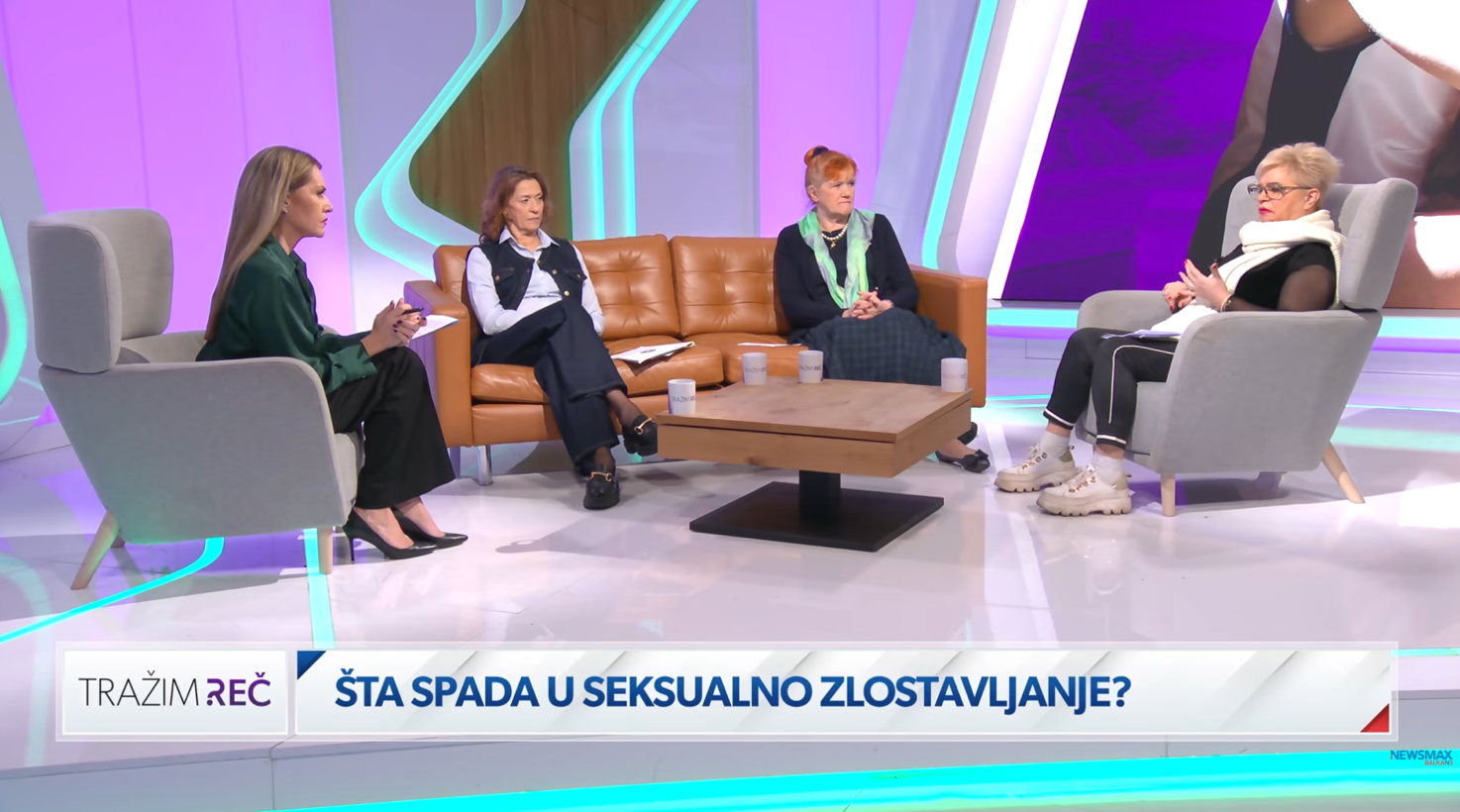
The broadcast discusses what exactly constitutes sexual violence. It was also emphasized that the harm caused by harassment and abuse remains a blind spot for many sports organizations, whether due to fear of reputational damage or because of ignorance, silence, and complicity. Therefore, sexual harassment and abuse in sport stem from the abuse of power dynamics, and organizations failing to address this can be seen as symptomatic of failed sports governance.
It was emphasized that athletes of all age groups have the right to engage in “safe sport”: an athletic environment that is fair, equitable, and free from all forms of intentional and unintentional sexual violence against athletes.
The most common risks of sexual abuse were also explained, which are higher when: there is a lack of protection and control (such as safe sport policies, protocols, or codes), when there is high ambition for success among parents, athletes, or coaches, when the abuser has strong motivation, and when athletes are highly vulnerable (especially concerning age and maturity, as some perpetrators target young athletes) in unsupervised environments.
It was noted that ignorance, denial, and resistance among sports leaders are extremely significant – perhaps even among athletes themselves – and that this poses a major challenge in terms of garnering support from within the sport community for risk mitigation and prevention. Understandably, most are reluctant to admit that sexual harassment and abuse occur in their organizations.
It was stressed that prevention begins with raising awareness about deliberate violence through the dissemination of evidence-based education and training programs, and also through other means, such as widely watched television broadcasts.
It was pointed out that an Athlete Protection Protocol was developed several years ago, but it has still not been introduced to the public or implemented in Serbian sport.
It was noted that, in addition to being victims, athletes, especially older ones, can also be perpetrators, but that coaches are most frequently the perpetrators.
It was concluded that future efforts should focus on education and prevention, with particular emphasis on explaining the following:
a. what exactly constitutes sexual violence?
c. that this is for the benefit of athletes.
d. that those responsible in clubs and federations are accountable for implementing rules against sexual violence in sport.
e. that all athletes have the right to be treated with respect, as well as protection from unintentional violence.
f. that sports leaders, as well as the highest sports organizations and institutions in Serbia, must be responsible for addressing athletes’ concerns and complaints, with reporting and referral mechanisms and a neutral resolution mechanism.
g. details on where to seek advice and support for all parties involved in a complaint.
h. coaches should foster strong partnerships with athletes’ parents/guardians to promote safe sport, i. not allowing coaches to completely isolate athletes from parents and the club/federation.
i. that athletes should discuss this topic with their parents, and that parents should pay attention to changes in the behavior of children who are training.